When a veterinary journal uses the phrase “first reported case,” I pay attention. That language means something nobody has seen before just got documented, and in the world of exotic animal medicine, that matters.
A recently published case report has identified Streptococcus canis as the cause of both pneumonia and pyothorax in a pet chinchilla. That is the first time this specific bacterium has ever been documented causing this combination of serious respiratory disease in a Chinchilla lanigera. And because I know how quickly information like this can get lost in the noise, I wanted to break it down in plain language for chinchilla owners and breeders who need to understand what this means for their animals.
So what exactly is Streptococcus canis?
Streptococcus canis is a bacterium that naturally lives in dogs and cats. It hangs out in their mouths, their respiratory tracts, and on their skin without causing any problems most of the time. In those species, it only tends to cause illness when something knocks the immune system down first, things like stress, overcrowding, or an underlying health issue.
In dogs and cats, this organism has been connected to everything from minor skin infections to serious conditions like pneumonia, blood poisoning, and infected fluid around the lungs. Over time, researchers have realized it can also infect species beyond just dogs and cats. Until this new case report, though, nobody had documented it causing this level of respiratory disease in a chinchilla.
What is pyothorax and why is it dangerous?
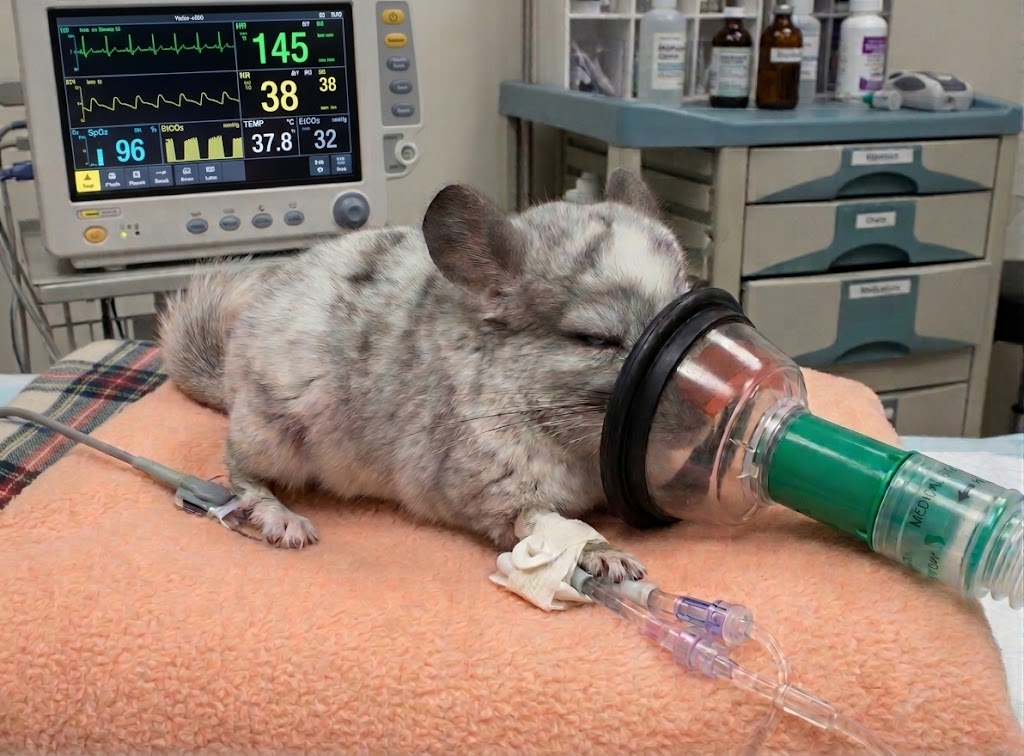
Pyothorax sounds technical but the concept is straightforward. It means there is infected, pus-filled fluid building up in the chest cavity around the lungs. As that fluid accumulates, it squeezes the lungs from the outside, making it harder and harder for the animal to breathe.
In any species, this is a medical emergency. In chinchillas, it is especially dangerous. Our animals are what veterinarians call obligate nasal breathers, meaning they breathe through their nose and have very little physiological backup when their lungs are compromised. They have small chest cavities and almost no room for error when something is pressing on that space.
By the time a chinchilla is breathing with obvious difficulty, it is already in serious trouble.
Why does this particular report matter?
Two reasons.
First, it expands the list of what veterinarians need to rule out when a chinchilla comes in with respiratory distress. Before this report, a vet thinking through bacterial causes would have focused on the usual suspects: Pasteurella, Bordetella, Klebsiella, and Streptococcus equi subsp. zooepidemicus, which has been showing up with increasing frequency in the chinchilla community in recent years. Now S. canis specifically needs to be on that list too, and it needs to be cultured for, not assumed.
Second, it raises a question about exposure that most chinchilla owners have probably never considered. This is a dog and cat bacterium. If your chinchilla lives in a household with dogs or cats, or has any regular contact with them, there is a potential pathway for this organism to reach your chin. That does not mean it will. It means your vet needs to know about your other pets when they are working up a respiratory case.
What should you actually do with this information?
Know the early signs and take them seriously. Chinchillas are prey animals built to hide weakness. By the time they look obviously sick, they have usually been fighting something for a while. Watch for subtle changes: eating less, sitting hunched and still, eyes that look heavy or half-closed, or breathing that seems slightly faster than normal. Those quiet signals are often the only warning you will get.
Tell your exotic vet your whole household situation. Dogs in the home, cats in the home, any animals your chinchilla has contact with. Give them the full picture so they can work the differential diagnosis correctly from the start.
Do not skip the imaging. Pyothorax in a small animal does not always announce itself obviously. A vet who only listens to the chest with a stethoscope may not catch fluid buildup in an animal this size. Chest radiographs are the only reliable way to see what is actually happening in that chest cavity.
Get to a vet fast. This is not a wait and see situation. Pyothorax does not resolve on its own and requires drainage, the right antibiotic therapy, and supportive care. The faster treatment starts, the better the odds.
One more thing on antibiotics, because this catches people off guard. Not all antibiotics are safe for chinchillas. As hindgut fermenters, they rely on a very specific balance of gut bacteria to survive. Penicillin, amoxicillin, clindamycin, and several others that are completely routine in dogs and cats can be fatal to a chinchilla. Any antibiotic used must be chosen by a vet who knows exotic small mammals and guided by culture and sensitivity results from your specific animal.
The bigger picture
Reports like this are a reminder that chinchilla medicine is still catching up. We are working with a relatively small body of peer-reviewed research, and there are still significant gaps in what we know. Every first-report case fills in part of the picture.
I have been keeping chinchillas for over twenty years. I am not sharing this to alarm anyone. I am sharing it because informed owners catch things earlier, ask better questions at the vet, and make faster decisions when it counts. That is what saves animals.
If your chinchilla is showing any signs of respiratory distress, do not wait it out. Find an exotic vet, describe everything you have observed, and mention this organism by name. Your vet can look up the case report and factor it into their diagnostic approach.
That is how we use new science in the real world.
Shahna Powell is the author of Chinchilla Care 101 and Editor in Chief of Chinchilla Connection Magazine. She has been breeding and raising chinchillas at Royal Chinchillas in Grass Valley, California for nearly two decades.
Leave a Reply