
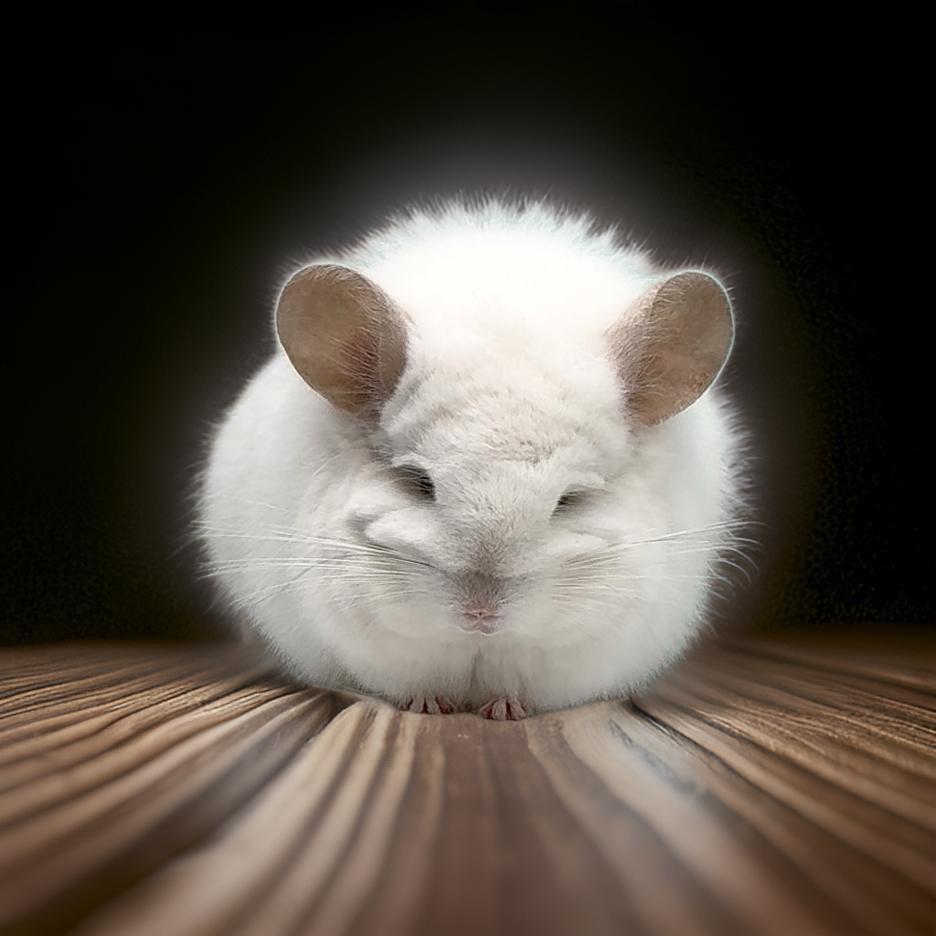
People are always quick to place chinchillas into a neat little category—either crepuscular or nocturnal. But the reality isn’t that black and white. In fact, chinchillas are both, and their activity levels are strongly influenced by their environment.
The Science Behind Chinchilla Activity Patterns
Chinchillas are naturally nocturnal, and both research and their anatomy support this classification.
• A study by Łapiński et al. (2020) found that farmed female chinchillas were most active at night, particularly during the darkest hours.
• Another study by Deane et al. (2017) using trail cameras in the wild observed that chinchillas were most active between 11 PM and 2 AM.
Beyond research, their anatomy also points to nocturnal behavior. Chinchillas have large eyes adapted for low light vision, helping them navigate and forage in the dark. Their long whiskers provide tactile feedback, allowing them to sense their surroundings, which is especially useful at night. Additionally, their keen hearing helps them detect predators in pitch-black environments, making nighttime their safest time to be active.
Why Do Some Chinchillas Act More Crepuscular?
If research and anatomy confirm that chinchillas are nocturnal, why do so many owners report their pets being most active at dawn and dusk? The answer lies in environmental adaptation.
In captivity, chinchillas adjust their activity patterns based on their surroundings. With artificial lighting, human schedules, and daytime interactions, many chinchillas shift toward a more crepuscular routine, waking up when their owners are around and settling down when the house is quiet.
This means that while their natural instincts remain nocturnal, their behavior at home is often influenced by when their humans are awake and engaging with them.
What This Means for Chinchilla Owners
Understanding their activity levels helps create a better home environment for them—and for you.
• Expect plenty of nighttime activity, including jumping, chewing, and cage surfing.
• If you’re a light sleeper, avoid keeping their cage in your bedroom unless you can sleep through the noise.
• Know that each chinchilla is different—some will wake up at dusk, while others will stay up all night.
Want more expert insights into chinchilla behavior? Join us at Global Chinchilla Alliance and learn more about your furry friend’s unique habits!
So, are chinchillas crepuscular or nocturnal? The answer is both. In the wild, they are naturally nocturnal, but in home environments, they adapt and often become more crepuscular.
References
Deane, A., Deane, L., & Lansdale, C. (2017). Observations on behaviors exhibited by wild chinchillas (Chinchilla lanigera). Journal of Wildlife Research, CRE7, 303–312.
Łapiński, Ł., Liedbała, D., Zarkowska, B., Rutkowska, R., & Wais, Z. W. (2020). The effects of age, size, and cage complexity on the behavior of farmed female chinchillas (Chinchilla lanigera). Journal of Animal Behaviour, 7, 112–119.
Leave a Reply